cuida el agua

cuida el agua
cuida el agua

una venezuela mas verde

una venezuela mas verde
yo constribuyo

lunes, 22 de marzo de 2010

animales en riesgo (tortuga arrau)


La tortuga Arrau es la más grande del género Podocnemis y de todos los quelonios fluviales del continente americano. Una hembra adulta puede llegar a pesar 50 Kg. y su caparazón medir más de 80 cm de longitud.


The tortoise Arrau is the biggest of the kind(genre) Podocnemis and of all the fluvial quelonios of the American continent. An adult female can manage to weigh 50 kg and his(her,your) shell to measure more than 80 cm of length.


La tortuga Arrau,

un quelonio en peligro crítico de extinción

The tortoise Arrau, a quelonio in critical danger of extinction


A program exists to reinforce his(her,your) populations from 1992, the illegal trade and the lack(mistake) of environmental education support threatened this species(kind).


La principal amenaza para la tortuga Arrau es la sobreexplotación de sus poblaciones como fuente de alimento y para la obtención de otros productos. El aprovechamiento sistemático de la especie se inicia incluso antes de la colonización española, cuando las etnias indígenas acudían a las playas de desove a capturar tortugas para el consumo de su carne, elaborar manteca y recolectar huevos.


The principal threat for the tortoise Arrau is the overexploitation of his(her,your) populations as food source(fountain) and for the obtaining of other products. The systematic utilization of the species(kind) begins even before the Spanish settling, when the indigenous etnias were coming to the beaches of spawning to capture tortoises for the consumption of his(her,your) meat, to elaborate lard and to gather eggs.




jueves, 4 de marzo de 2010

desorden alimenticio


Existe cuando las actitudes de una persona hacia la comida y el peso, son tales que los sentimientos hacia el trabajo, escuela, relaciones, actividades diarias y emociones, son determinadas por lo que se ha o no se ha comido o por un número en la báscula (Siegel, Brisman y Weinshal, 1988). Las personas que sufren un desorden en la alimentación se caracterizan por:


  • Extremistas en cuanto a consumo de alimentos, que puede manifestarse por una pérdida severa de peso, rápidos aumentos de peso, o fluctuaciones muy importantes en peso.

  • Esta a disgusto con su imagen corporal, a menudo acompañado de una distorsionada percepción de las señales del cuerpo (hambre, enojo, fatiga, etc.).

  • Prácticas poco saludables para mantener el peso, como son: ayuno, inanición, comer compulsivamente, uso indiscriminado de laxantes, medicamentos para bajar de peso, diuréticos y exceso de ejercicio.

  • Un miedo irracional a engordar y un deseo obsesivo de adelgazar.

  • Los dos desórdenes más comunes son la Anorexia Nervosa y la Bulimia Nervosa. Existen otros como el Comedor compulsivo o el Ejercitado Compulsivo. Algunas personas pueden tener síntomas de más de uno de estos desórdenes.

ingels:....


It(He,She) exists when the attitudes of a person towards the food and the weight, are such that the feelings towards the work, school, relations, daily activities and emotions, are determined by what is existed or has not eaten up or by a number in the scale (Siegel, Brisman and Weinshal, 1988). The persons who suffer a disorder in the nourishment are characterized for:


· Extremists as for food consumption, which can demonstrate for a severe loss of weight, rapid increases of weight, or very important fluctuations in weight.
· This one to displeasure(grief) with his(her,your) corporal image, often accompanied of a distorted perception of the signs of the body (hunger, annoyance, fatigue, etc.).
· slightly healthy Practices to support the weight, since they are: fasting, starvation, to eat compulsive, indiscriminate use of laxatives, medicines to go down weight, diuretics and excess of exercise(fiscal year).
· An irrational fear of putting on weight and an obsessive desire to slim.
· Both most common disorders are the Nervous Anorexia and the Bulimia Nervosa. Others exist as the compulsive Dining room or Exercised Compulsive. Some persons can have symptoms of more than one of these disorders.


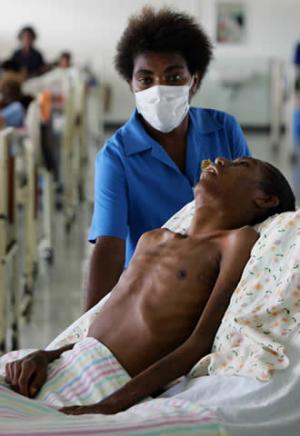
VIH (virus de inmunodeficiencia humana) es el virus que produce la enfermedad del SIDA. Este virus pasa de una persona a otra a través del contacto de sangre con sangre (transfusiones sanguíneas, agujas infectadas con VIH y contacto sexual). Además, una mujer embarazada infectada puede contagiar a su bebé con el virus VIH durante el embarazo, el parto, o en el amamantamiento.


El SIDA (síndrome de inmunodeficiencia adquirida) se adquiere cuando la infección VIH debilita el sistema inmune del individuo de tal modo que le resulta difícil luchar contra ciertas enfermedades e infecciones. También se presentan infecciones "oportunistas" que aprovechan la oportunidad que les brinda el sistema inmune debilitado y producen enfermedad.


español:VIH (virus of immunodeficiency humanizes) is the virus that produces the disease of the AIDS. This virus happens from a person to other one across the contact of blood with blood (blood transfusions, needles infected with VIH and sexual contact). In addition, a pregnant infected woman can infect his(her,your) baby with the virus VIH during the pregnancy(embarrassment), the childbirth, or in the nursing.
The AIDS (syndrome of acquired immunodeficiency) is acquired when the infection VIH debilitates the immune system of the individual in such a way that it turns out to him(her) difficult to fight against certain diseases and infections. Also they present infections "opportunists" who take advantage of the opportunity that offers to them the immune debilitated system and produce disease.